A GIS-driven, optimisation-and-simulation decision support system that decides who to vaccinate first, how many doses to send where, and how vehicles should deliver them - under limited, excessive and disrupted supply. Demonstrated on Greater Melbourne.
When vaccine supply is scarce and demand is everywhere, two questions decide outcomes: who gets vaccinated first, and how do limited doses physically reach them. This project tackles both at once for a two-dose regimen, where a second dose must be reserved and delivered on schedule.
The system layers spatial health-risk mapping over an optimisation engine and a discrete-event simulation, so planners can test a policy before committing real doses, vehicles and staff to it. The case study covers the Greater Melbourne Metropolitan Area at SA1 resolution.
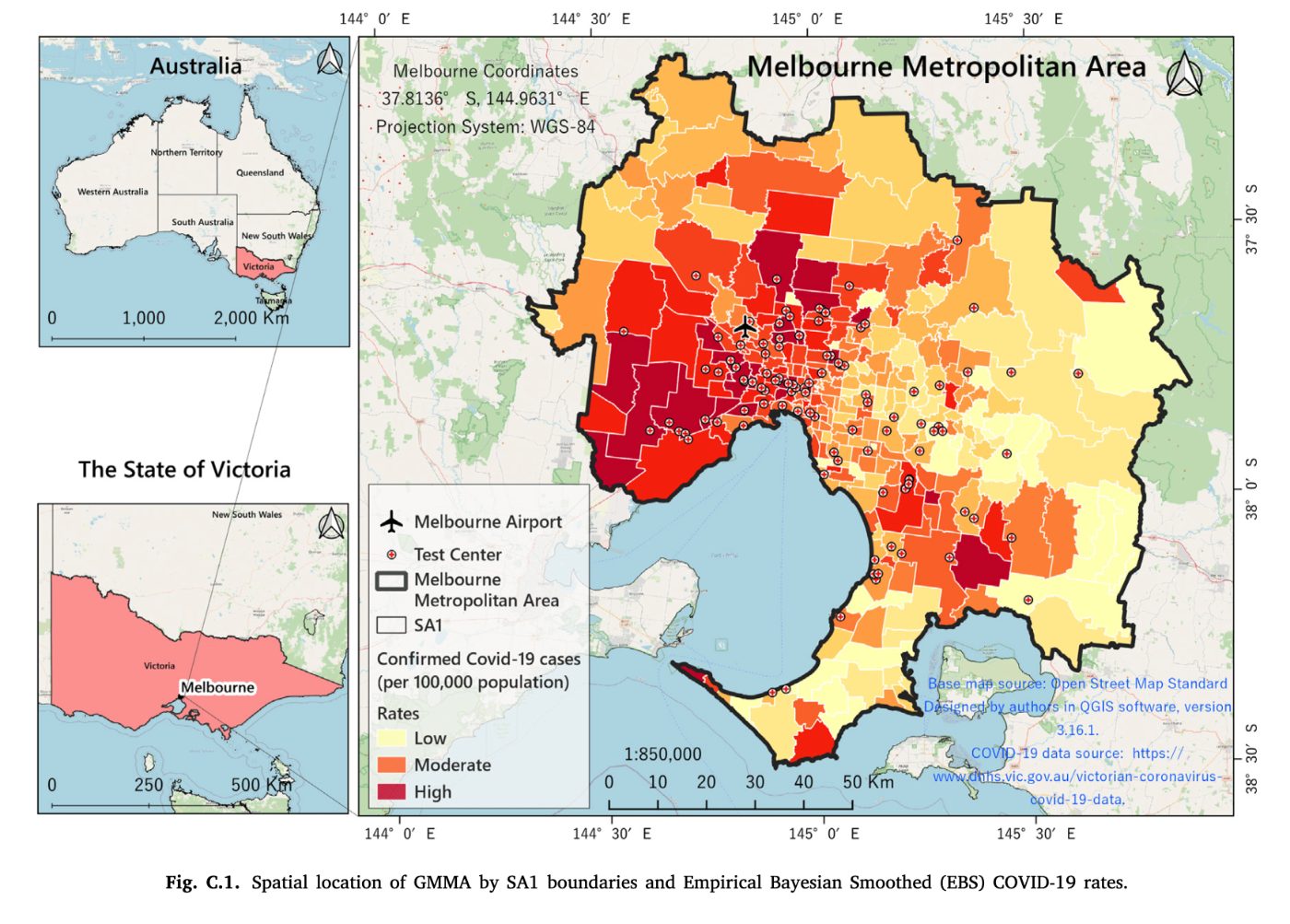
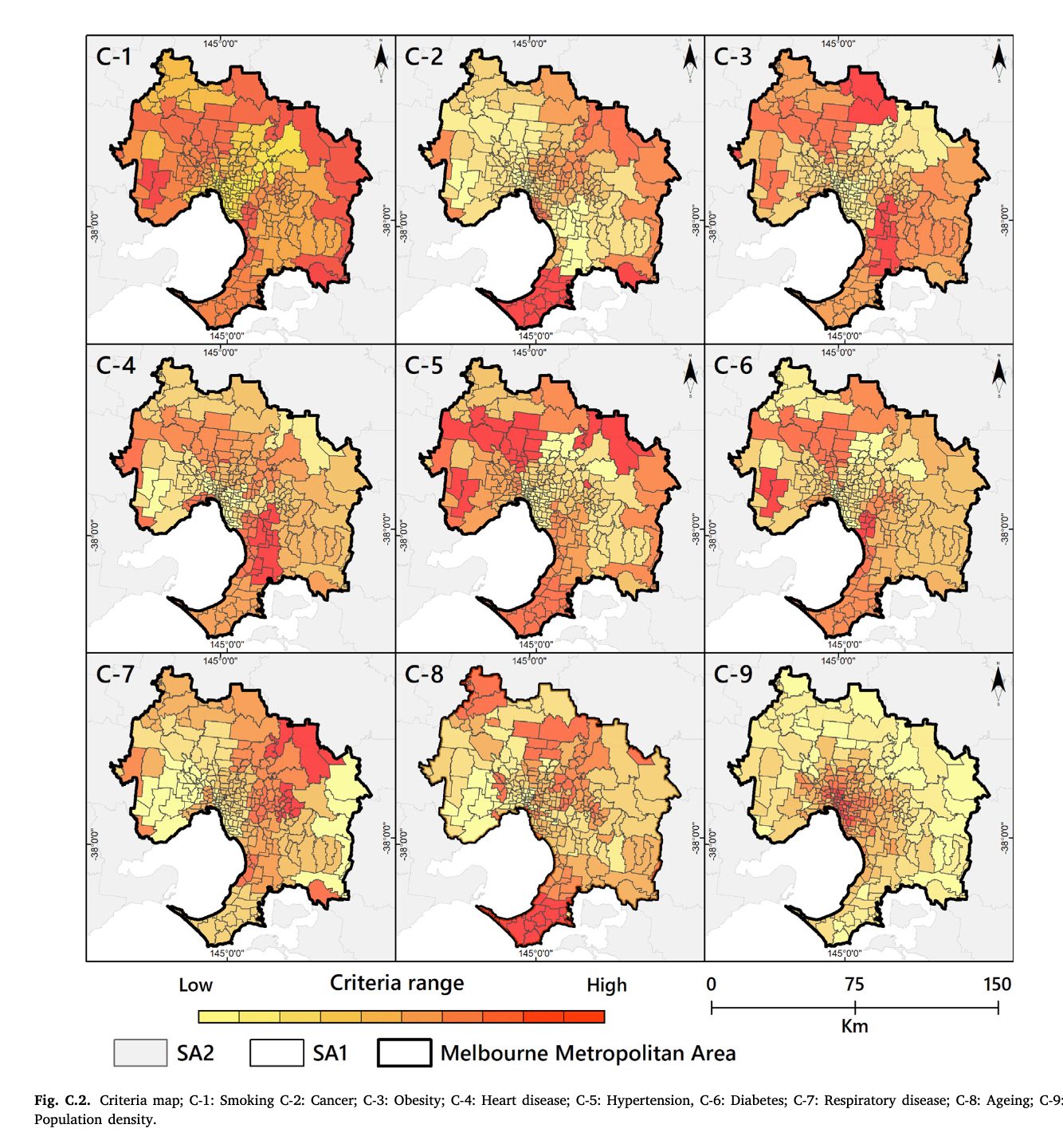
Population health criteria (age, comorbidities, exposure) fused into a spatial priority surface.
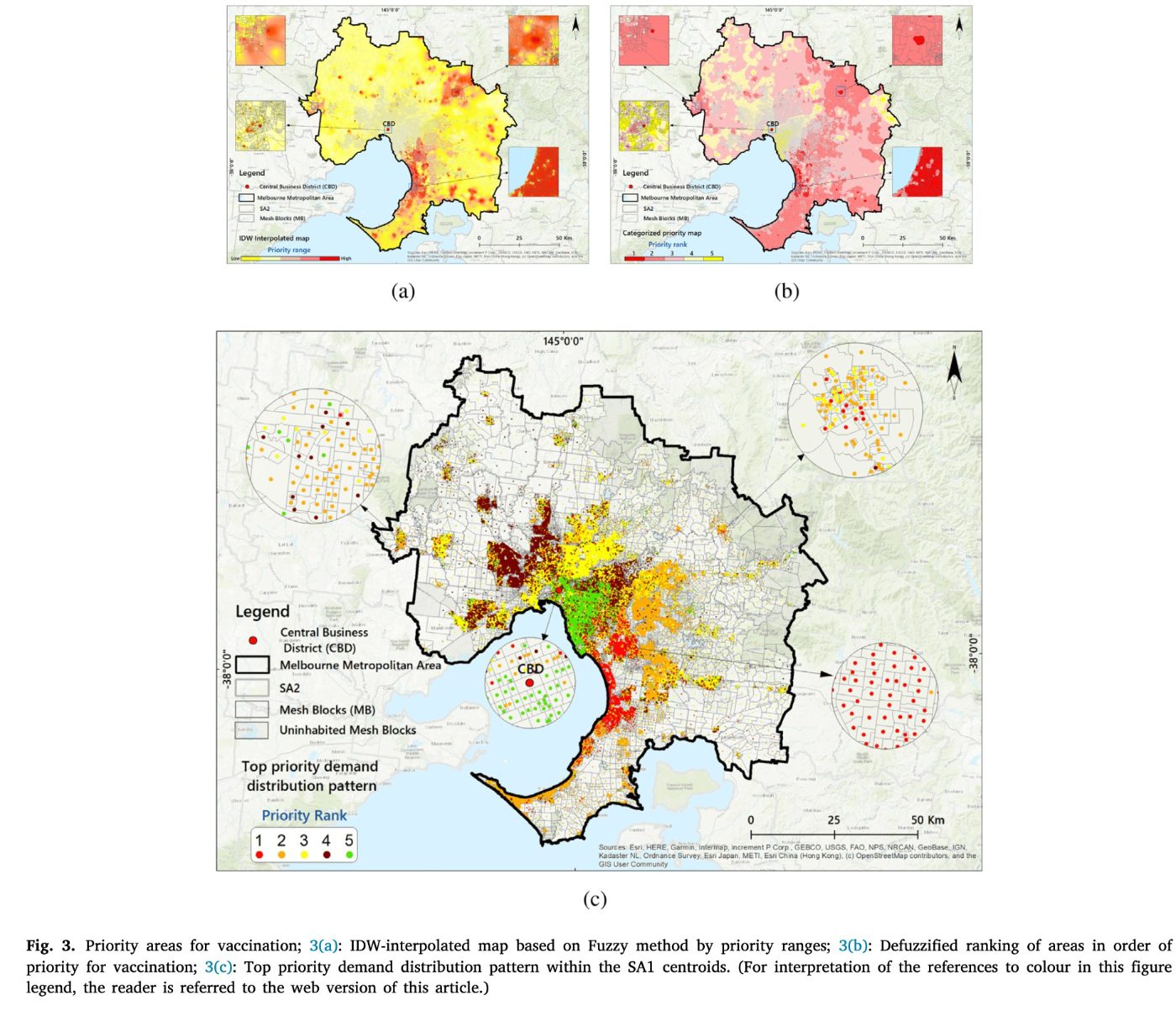
Fuzzy multi-criteria scoring converts risk layers into ranked vaccination priority areas.
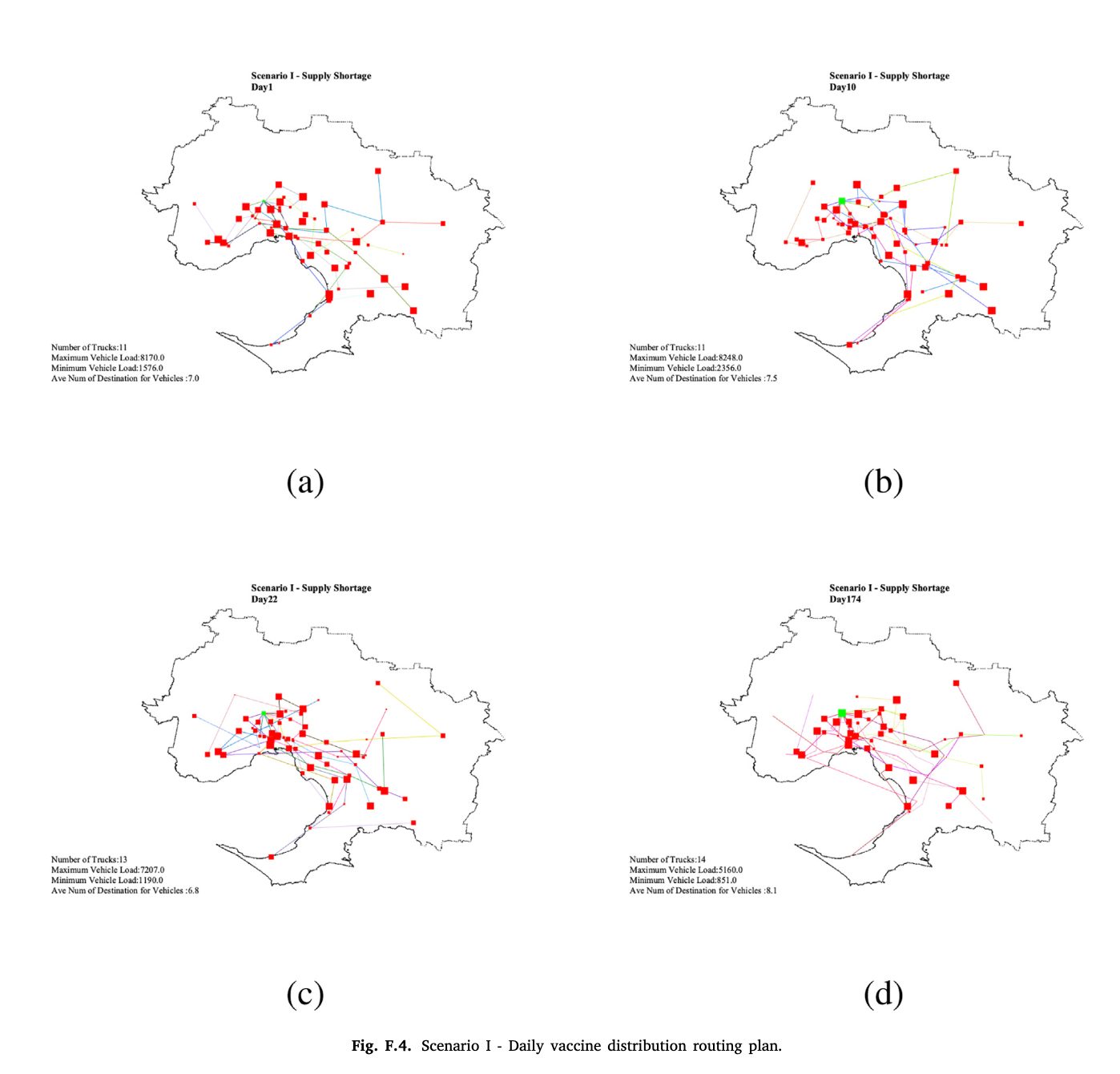
Hybrid genetic algorithm allocates doses and builds two-dose delivery & routing plans.
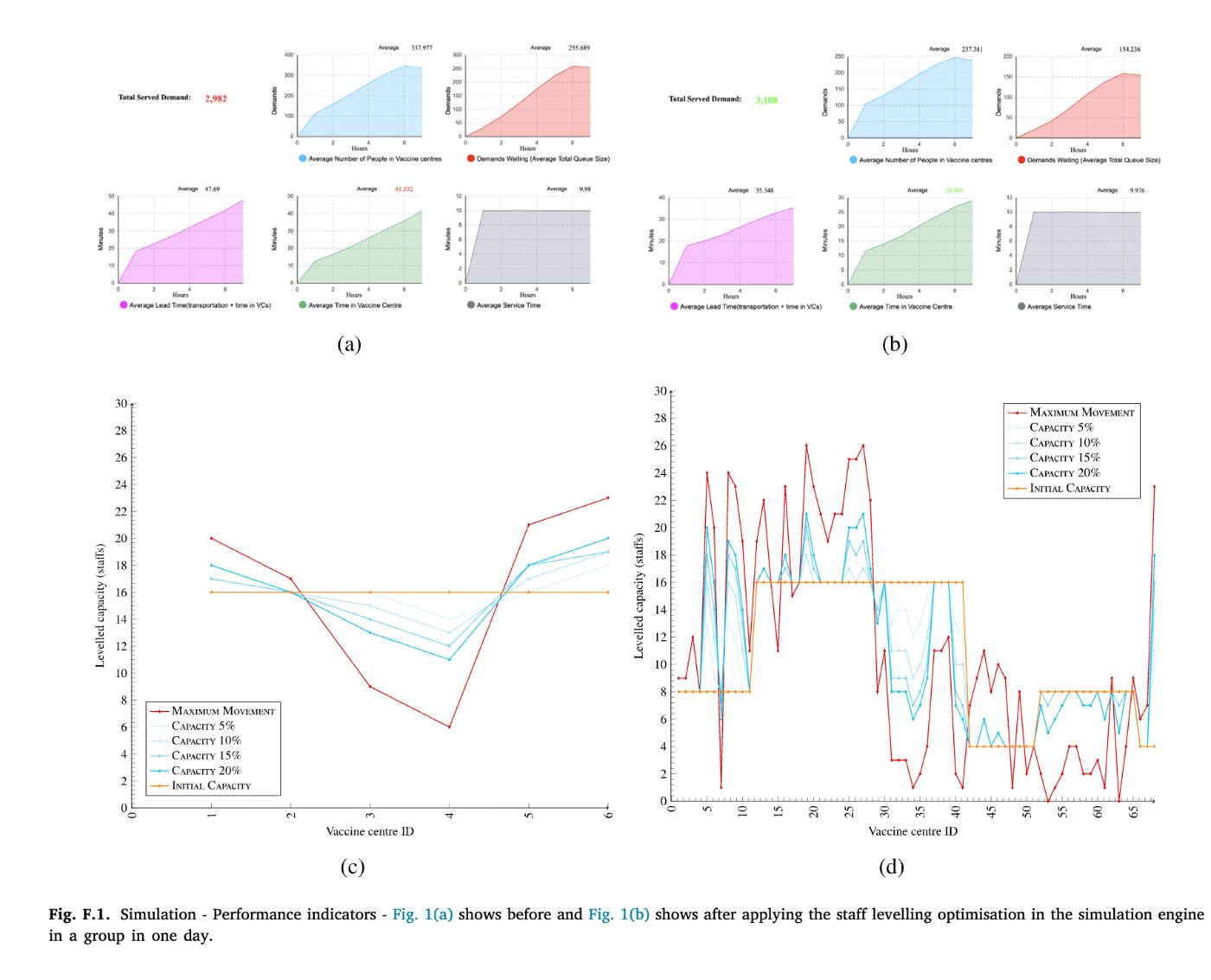
Discrete-event model checks throughput, staffing and resilience under each scenario.
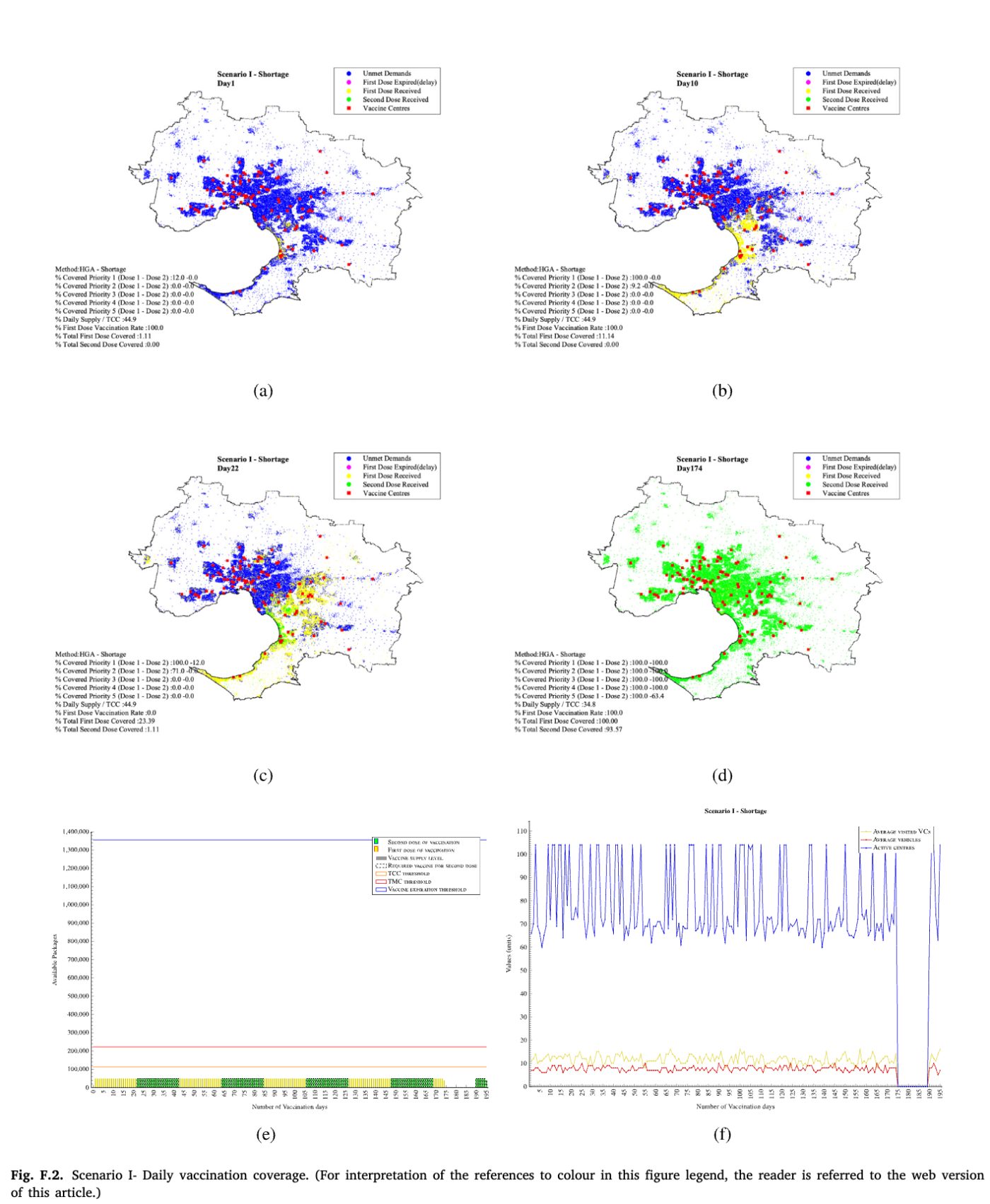
Scarce doses - strict prioritisation decides who is protected first.
Ample doses - the bottleneck shifts to staffing, throughput and logistics.
Supply shock mid-campaign - the plan is stress-tested for resilience & recovery.
Risk-based prioritisation front-loads coverage of the highest-risk populations.
Two-dose scheduling reserves and delivers follow-up doses on time.
Under ample supply, workforce levelling - not doses - drives throughput.
Re-optimisation recovers coverage quickly after a supply shock.
Optimised routing keeps vehicle distance and loads efficient across the metro.
Planners test a policy end-to-end before committing real resources.
Shahparvari, S., Hassanizadeh, B., Mohammadi, A., Kiani, B., Lau, K.H., Chhetri, P., & Abbasi, B. (2022). A decision support system for prioritised COVID-19 two-dosage vaccination allocation and distribution. Transportation Research Part E: Logistics and Transportation Review, 159, 102598.
🔗 doi.org/10.1016/j.tre.2021.102598A research showcase of a decision-support system for vaccine distribution and wastage reduction.
Cold-chain, expiry and demand uncertainty drive allocation and replenishment decisions.
Synchronising supply with administration capacity is what cuts wastage.
